Weather-exposed chimney care
Wind, snow, freeze-thaw: what to notice from the ground.
A Colorado-specific observation guide for chimney and roofline changes after strong weather, without turning a photo into a diagnosis.
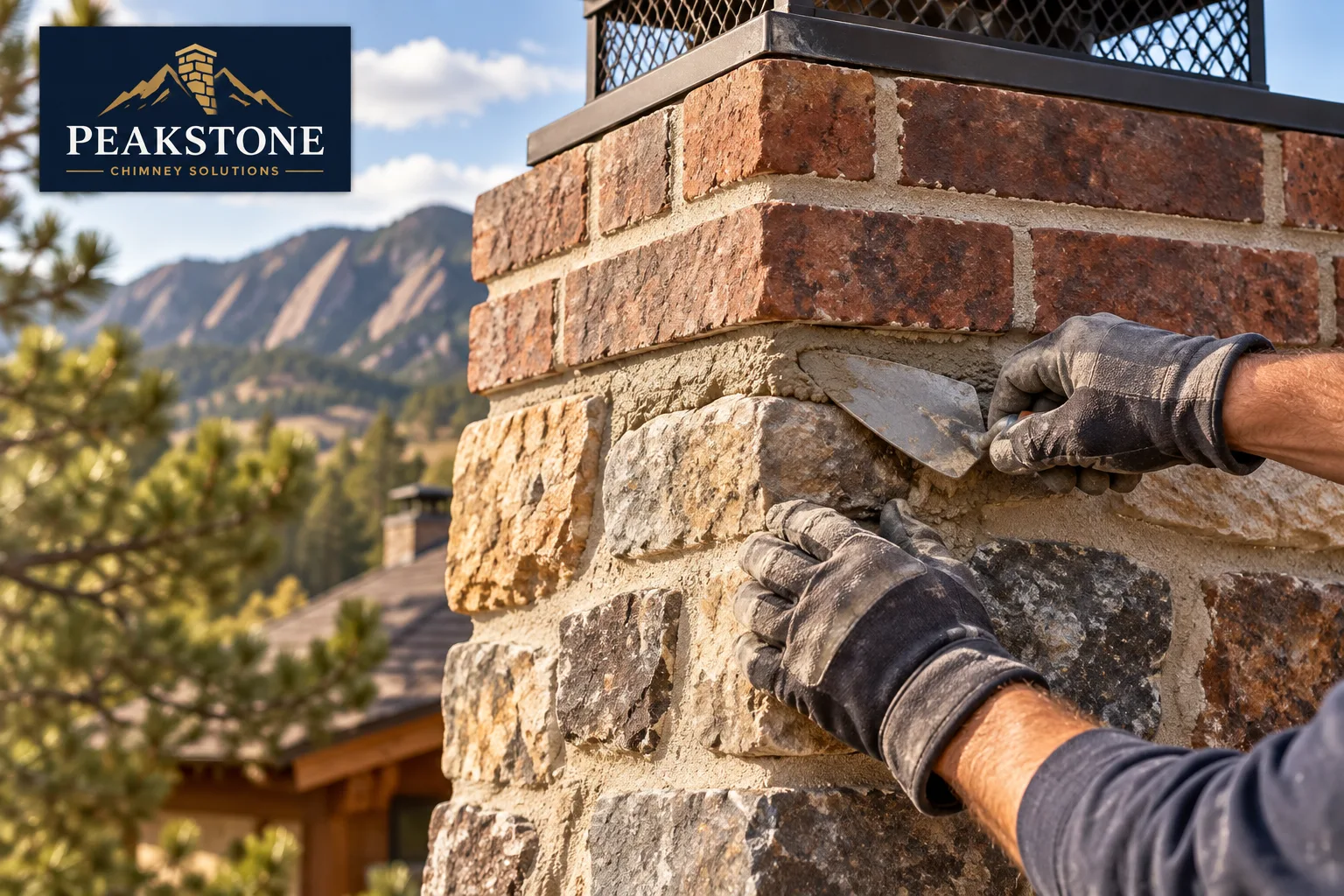
A weather event can reveal a problem that was already developing, or it can create a new concern. The useful move is to document what changed safely and explain the timing clearly when you call.
After high wind
Colorado’s foothills and Front Range can experience significant winter high-wind conditions. From a safe ground position, look for a visibly shifted cap, loose-looking flashing, fallen debris, or a change around the chimney top.
Avoid using binoculars from an unstable location, climbing a ladder, or walking a roof after a storm. A simple photo and the date of the event are more useful than taking a personal risk.
After snow and temperature swings
Water marks, changed mortar, staining, or a new damp smell may be worth noting after snowmelt or a wet-weather period. These symptoms do not confirm the point where water entered, because crowns, caps, flashing, masonry, and roof transitions can all be relevant.
A quality assessment separates the visible symptom from the actual source. That keeps a homeowner from committing to a generic treatment before the materials and interfaces have been reviewed.
- Photograph the condition from the ground or indoors only.
- Note the room, wall, or roofline where a mark appeared.
- Record whether the issue followed wind, snowmelt, rain, or a temperature change.
- Do not cover, seal, or patch a chimney component before the condition is understood.
When the concern becomes urgent
If a chimney component appears loose or unstable, keep people away from the area below and call to discuss the situation. If there is fire, smoke inside, or a carbon-monoxide alarm, leave the area and call 911.
Common questions
Clear answers for the season.
Does a water stain tell me where the leak is?
No. It is helpful evidence, but it does not identify the source without reviewing the relevant chimney and roofline details.
Should I apply sealant after I see cracking?
Do not choose a treatment from one visible symptom. The material, source of moisture, and overall condition need to be understood first.
Why mention the weather when I call?
The timing of wind, snow, rain, or temperature changes helps explain what changed at the property and supports a more focused service conversation.
Official sources
Check the current authority.
Weather, air-quality restrictions, permits, and appliance guidance can change. These are the sources used to keep this guide grounded.
NWS Colorado high-wind safety
Front Range and foothill high-wind context, watches, and safety information.
Open source ↗OFFICIAL RESOURCENWS Denver/Boulder forecasts
Current Colorado weather, warnings, and local forecast information.
Open source ↗OFFICIAL RESOURCELakewood building permits
Current City of Lakewood permit and inspection information for applicable work.
Open source ↗