Safety-first problem guide
Smoke in the house from a fireplace: the safe next step.
A safety-first guide for Colorado homeowners when smoke, odor, or a change in draft appears indoors during fireplace use.
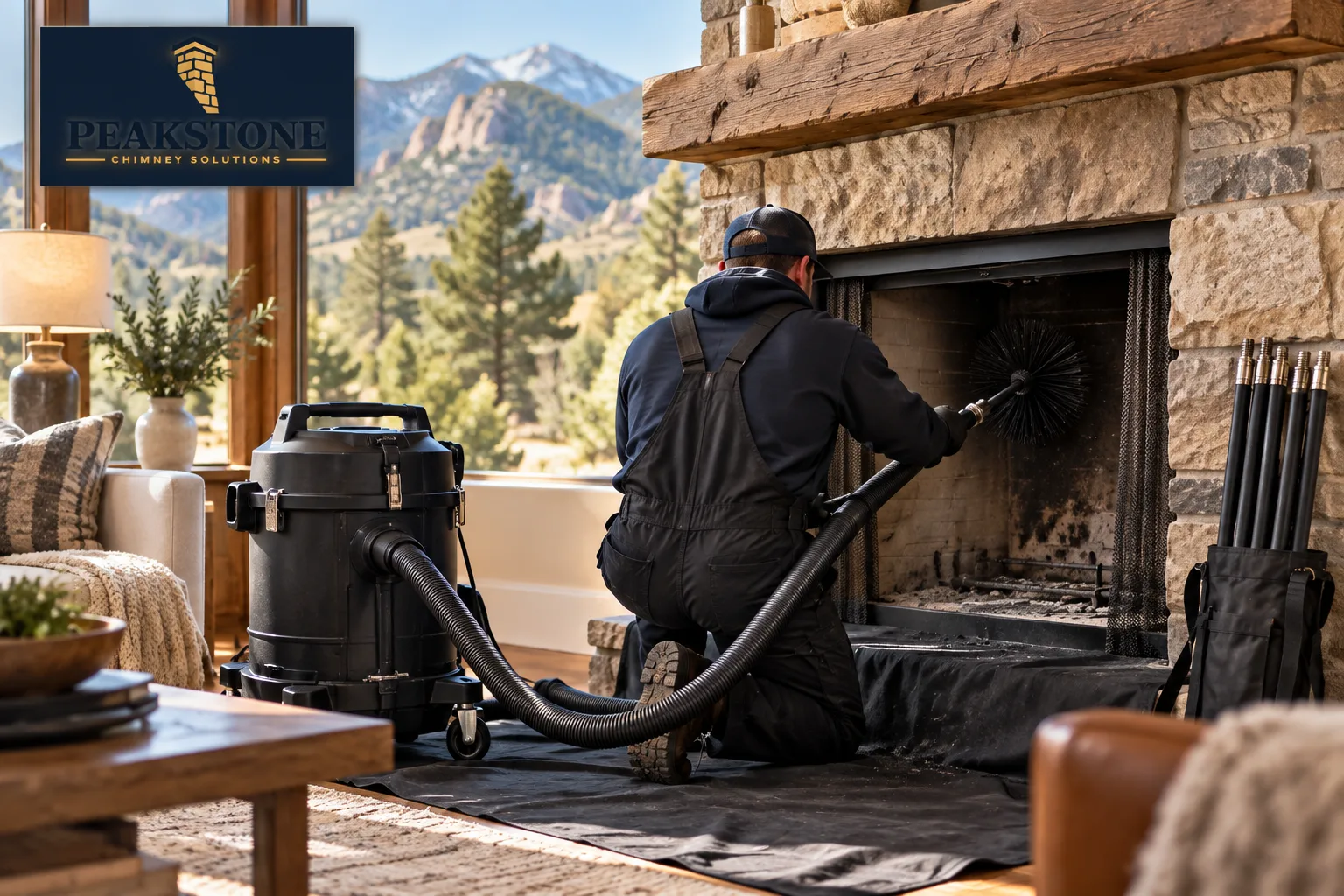
Smoke indoors is not a normal condition to work around. This guide prioritizes immediate safety, then helps you record the details that make a professional service conversation more useful.
Stop using the fireplace when smoke enters the room
Stop using the fireplace and do not try to force a draft by changing equipment, altering a gas system, or climbing onto a roof. For a wood-burning fireplace, a closed damper can be one possible factor, but persistent indoor smoke requires a proper assessment rather than repeated trial and error.
Smoke, odor, or a sudden draft change can relate to the fireplace, flue, chimney, weather, or pressure conditions inside the home. A single symptom does not establish the cause.
Record the useful facts safely
From a safe location, note the appliance type, whether the system is wood or gas, what you were doing when the condition appeared, and whether the issue followed wind, snow, rain, or a temperature shift.
Do not take roof photos, remove components, or make gas-system adjustments. A ground-level exterior photo and a clear description are enough to begin.
- Was the fireplace wood-burning or gas?
- Was the damper confirmed open before a wood fire?
- Did smoke, odor, or draft change occur during use or when the fireplace was off?
- Did it follow wind, snowmelt, rain, or a weather change?
How to begin the service conversation
Call PeakStone with the facts you recorded. We can confirm whether the address is within the listed service area and discuss the appropriate starting point. Availability, diagnosis, and any repair scope are not assumed from this guide.
Common questions
Clear answers for the season.
Can I keep using the fireplace if smoke comes into the room?
Stop using it and arrange an appropriate assessment. Indoor smoke is a condition to take seriously, not a normal inconvenience.
Could cold or wind be the cause?
Weather timing can be useful context, but it does not prove the cause. System, draft, venting, and home-pressure conditions can all be relevant.
What if I smell gas or a carbon-monoxide alarm sounds?
Leave the area immediately and call 911. Do not attempt to diagnose or repair the condition yourself.
Official sources
Check the current authority.
Weather, air-quality restrictions, permits, and appliance guidance can change. These are the sources used to keep this guide grounded.
CPSC carbon-monoxide alarm guidance
Emergency response when a carbon-monoxide alarm sounds and seasonal fireplace guidance.
Open source ↗OFFICIAL RESOURCECSIA homeowner resources
Damper, smoke, chimney, and annual-inspection information for homeowners.
Open source ↗OFFICIAL RESOURCENWS Colorado high-wind safety
Current Front Range and foothill wind context.
Open source ↗